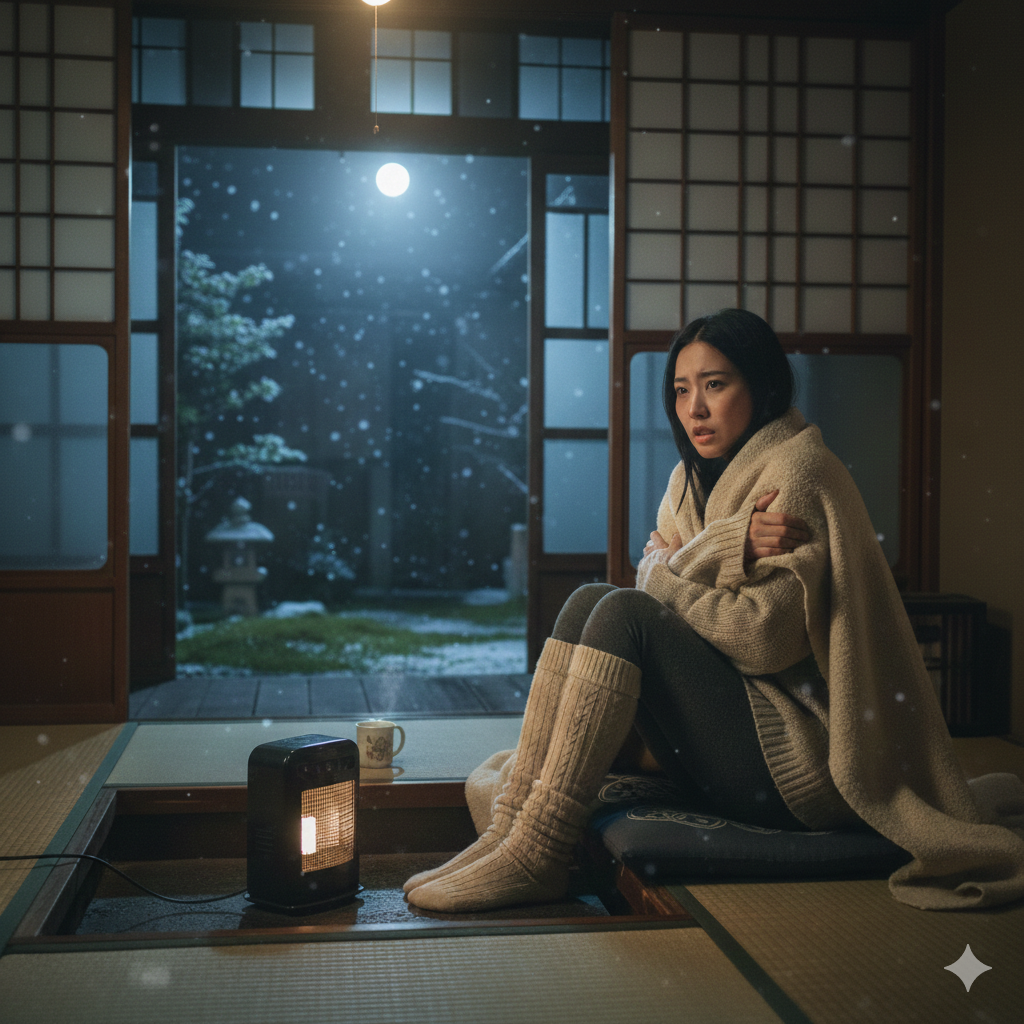
1. Introduction: The Shock of the “Inside” Cold
In Korea, winter is a battle against the elements (often hitting -10°C or lower). However, thanks to the highly developed Ondol (underfloor heating) system, the inside of a Korean home remains a toasty sanctuary.
When I first moved to the Tokyo area, I looked at the weather forecast—a “mild” 2°C—and thought it would be easy. But the laughter stopped the moment I stepped inside my apartment. I was shocked; it felt colder inside than outside! If you are living in Japan or planning to move here, understanding why these houses are built this way is a matter of survival.
2. The Reality: Japan’s Infamous Indoor Temperatures
Japan has an infamous reputation for low indoor temperatures. While the World Health Organization (WHO) recommends a minimum of 18°C for healthy living, many Japanese homes hover just above 10°C in winter.
According to research from the NIH (National Library of Medicine), the average Japanese living room in winter is only 16.8°C, dropping to a staggering 12.8°C in bedrooms. Compared to European homes (UK/Germany) that maintain 19-20°C, residents in Tokyo or Kagawa are living in conditions technically considered “unhealthy” by international standards.
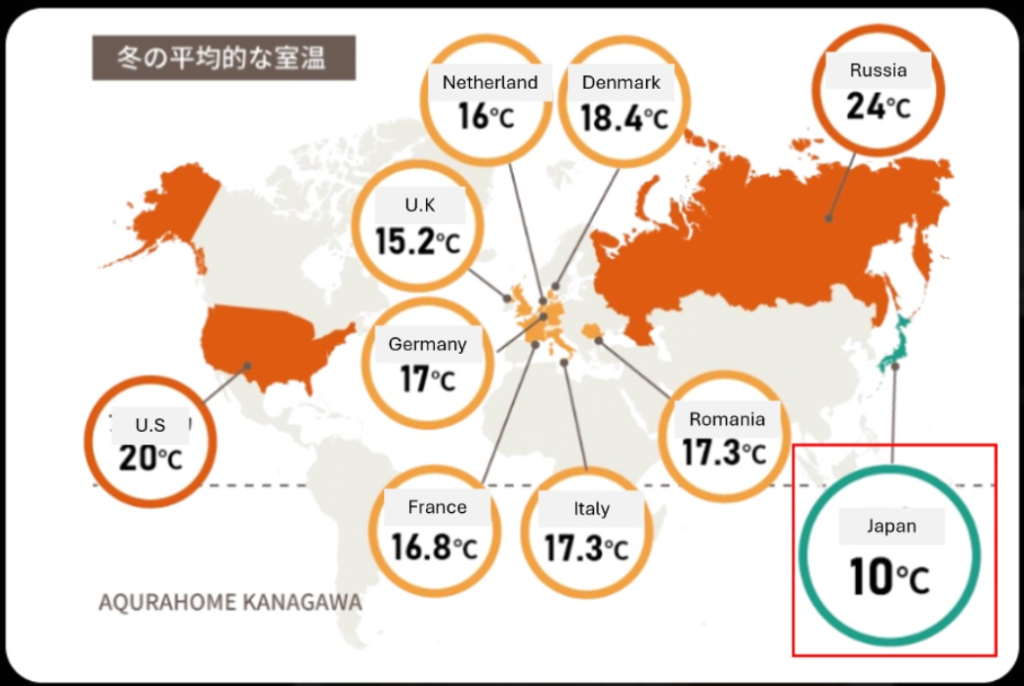
Indoor temperatures in Japan during winter are much colder than you’d expect.
3. The Structural Secrets: Why Is It So Cold?
- Outdated Insulation Standards: For decades, Japan’s building codes barely changed since the 1980s. Many homes use single-pane aluminum sashes, which are high-conductivity materials that practically “invite” the cold air inside.
- Built for Summer Humidity: Historically, Japanese architecture followed the philosophy: “A house should be built with the summer in mind.” Designing for airflow to prevent mold in the humid summer unfortunately turns houses into “wind tunnels” in the winter.
- Wooden Construction: Due to earthquake risks, lightweight wooden construction is the norm. While safe during a tremor, wood and drywall do not retain heat nearly as well as the thick concrete structures common in Korea or the US.
4. Survival Tips: How to Warm Your Home (and Body)
A. Budget-Friendly Quick Fixes
- Thermal Bedding: Visit Nitori for their “N-Warm” sheets or Uniqlo for “Heattech” blankets.
- Room Wear: Invest in high-quality fleece or “HMT” (Heat Management Technology) pajamas.
- The Kotatsu Life: If you’re on a budget, look for a second-hand Kotatsu (heated table). It is the most energy-efficient way to stay warm because it heats only the space you are in, rather than trying to warm a room with no insulation. It’s also the ultimate “productivity killer” because once you’re in, you won’t want to leave!
B. The “Easy” Insulation Hack
- Window “Bubble Wrap”: You can buy specialized thermal films or clear bubble wrap at Daiso or home centers. Applying this to the glass creates an air barrier that prevents “Cold Drafts” (Kaze-yoke) and significantly reduces condensation.
C. For Homeowners: The Power of Subsidies
The most effective upgrade is installing double-pane windows (Uchi-mado). To encourage this, the Japanese government has launched the “Housing Energy Saving 2026 Campaign.”
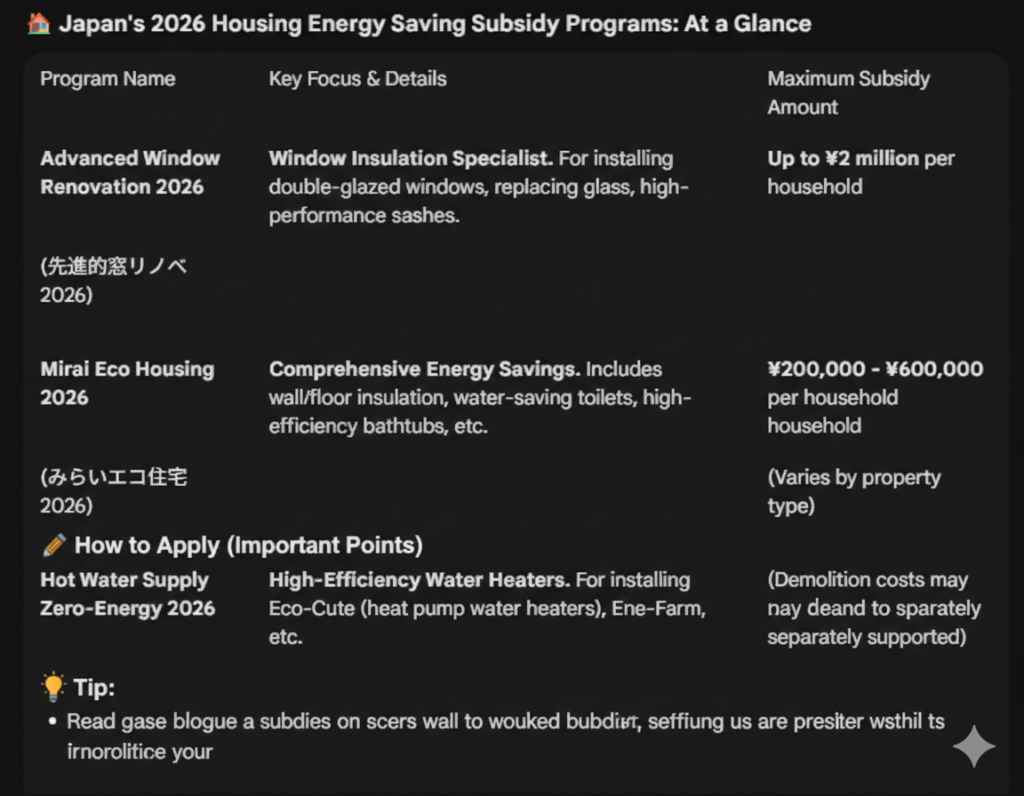
📝 How to Apply
- Use a Registered Operator: You cannot apply directly; you must hire a registered contractor for this campaign.
- Proxy Application: Once the work is done, the contractor applies for the subsidy on your behalf.
5. Closing: Adapting to the Chill
Living in a Japanese house during winter is a literal “chilling” experience. However, once you understand the architecture and equip yourself with the right tools—from government subsidies to a simple pair of fuzzy socks—you’ll find your own way to stay warm.
Stay cozy, and welcome to winter in Japan!
Leave a Reply