1. Introduction
Since the inauguration of Japan’s new Prime Minister, Sanae Takaichi (高市 早苗), foreign residents and those planning to move to Japan have started to see a noticeable and very real change in the country’s immigration stance. The administration has begun pushing for much stricter rules on visa renewals (在留期間更新, Zairyu Kikan Koshin) and the issuance of new Certificates of Eligibility (在留資格認定証明書, COE) for students and workers. For anyone currently living in Japan or planning to build a future here, it’s no longer enough to just “follow the rules”—you need to understand exactly how these policies are changing to protect your Status of Residence (在留資格, Zairyu Shikaku).
2. The Forces Driving Change: Why Now?
The Political Reality: The Surge of “Japanese First” (日本人ファースト)
The most significant shift comes from the rapid rise of populist, right-wing movements. Parties like Sanseito (参政党) have moved from the political fringes to the mainstream by championing the slogan “Japanese First (日本人ファースト).” Their rise is fueled by specific social conflicts that have hit the headlines in Japan:
- The “Kurdish Issue” in Saitama (川口市のクルド人問題): Growing friction between local residents and the Kurdish community in Kawaguchi City over noise, traffic violations, and safety has led many voters to demand stricter immigration control.
- Overtourism (観光公害, Kanko Kogai): Record-breaking numbers of tourists have led to “tourism pollution,” where locals in cities like Kyoto and Kamakura feel crowded out of their own lives.
- Foreign Land Ownership: Rising concerns over foreign entities buying up strategic land and forests.
Sanseito’s Electoral Breakthrough: Their growth is not just talk—it’s backed by numbers. In the 50th General Election (第50回衆議院議員総選挙) held in October 2024, Sanseito secured 3 seats, gaining a foothold in the Lower House. This momentum exploded in the 2025 Upper House Election (第26回参議院議員通常選挙), where they surged to 15 seats (including those not up for re-election). This massive jump has forced the ruling LDP to adopt “tough on immigration” policies to win back conservative voters who are moving toward Sanseito.
The Official Justification: Sustainability and Fairness
Publicly, the government calls this “Social Sustainability (社会の持続可能性).” They argue that to keep services like National Health Insurance (国民健康保険, Kokumin Kenko Hoken) and Pensions (年金, Nenkin) running smoothly, they must demand more money and stricter compliance from non-citizens. They frame it as ensuring that everyone “pays their fair share” to support Japan’s aging society.
3. Key Changes to Visas and Permanent Residency
The government is moving toward a “User Pays” model while increasing penalties for non-compliance.
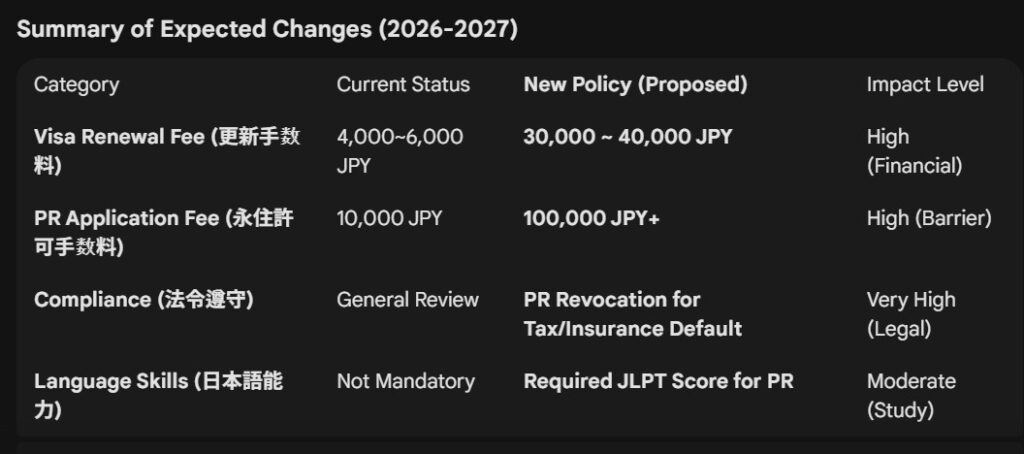
- Huge Fee Hikes: Renewal fees are expected to jump from 6,000 yen to 30,000–40,000 yen. Even more shocking, Permanent Residency (永住権, Eijuken) application fees could increase tenfold to over 100,000 yen.
- Revocation of Permanent Residency (永住許可の取消し): New laws allow the government to revoke PR status if you intentionally fail to pay taxes or insurance on time, or fail to carry your Residence Card (在留カード).
- Language Requirements: A push to mandate Japanese proficiency (e.g., JLPT N2) for long-term residency to ensure better integration.
4. Conclusion: Navigating the New Normal
For those of us living in Japan, the message is clear: don’t be careless. Ensure your taxes are paid, your insurance is spotless, and your records are always up to date.
While these changes are framed as “fairness,” it’s clear they are deeply tied to the political success of parties like Sanseito. Whether these strict measures will actually help Japan or simply drive away the global talent the country needs is a serious question. Is this a step toward better integration, or just a political move to appease an anxious public?
Regardless of the motive, the “easy” days of Japanese immigration are over. It’s time to be more prepared than ever.
Leave a Reply