Category: Geopolitics / International Relations
Keywords: China-Japan Conflict, South Korea Diplomacy, Northeast Asia Security, US-Japan-Korea Alliance, Semiconductor Supply Chain, Strategic Triangle
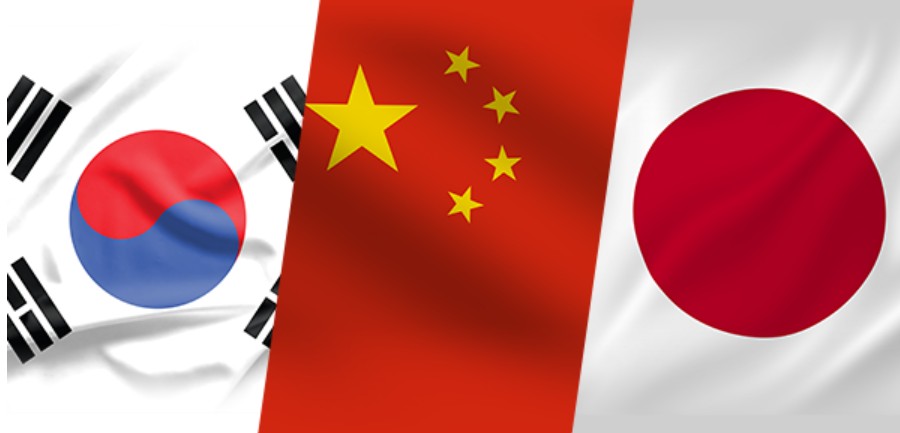
Northeast Asia is currently a geopolitical chessboard on fire. While the headlines are dominated by the “Strong vs. Strong” clash between China and Japan, there’s a quiet but massive shift happening in the middle. South Korea, once seen as the “meat in a sandwich” between its two giant neighbors, is now the most sought-after player in the region.
In this post, we’ll dive into why Japan and China are both courting South Korea, and how history’s “Strategic Triangle” is repeating itself in 2026.
1. The China-Japan Cold War: No More “Business as Usual”
The relationship between China and Japan has moved past simple disagreement into a full-blown strategic confrontation.
- Japan’s Pivot: Under the U.S.-Japan alliance, Japan has shifted from a pacifist stance to an “integrated deterrence” model. They are openly talking about Taiwan’s security and tech decoupling from China.
- China’s Economic Hammer: China isn’t staying quiet. They’ve recently slapped extreme export controls on “dual-use” materials—basically, the raw ingredients like Rare Earths that Japan needs for high-tech manufacturing.
- The Vibe: It’s a battle of wills. Japan is shoring up its defenses, while China is using economic coercion to punish Japan’s alignment with Washington.
2. The “Korea Premium”: Why Seoul Holds the Key
So, why is South Korea suddenly the “Linchpin”?
- The Tech Fortress: You can’t build a modern world without Korean semiconductors and batteries. Both China and Japan need Korea to keep their own economies running.
- The Security Buffer: For Japan, Korea is the front line against North Korean threats. For China, keeping Korea close is the only way to prevent the “U.S.-Japan-Korea” alliance from becoming an Asian version of NATO.
- Strategic Autonomy: South Korea has upgraded its status. It’s no longer just reacting to its neighbors; it’s hosting trilateral summits and acting as the regional stabilizer.
3. History Lessons: The “Scissors-Paper-Rock” of Diplomacy
History shows that in Northeast Asia, when two players fight, the third one wins. Let’s look at the “Tit-for-Tat” history of sanctions and pivots:
Scenario A: Korea vs. Japan (2018-2019)
- The Trigger: Disputes over historical forced labor during World War II
- The “Hammer”: Japan restricted exports of 3 critical semiconductor chemicals (Hydrogen Fluoride (High-purity Etching Gas), Photoresist and Fluorinated Polyimide) to Korea.
- The Pivot: While Seoul and Tokyo were not in good relationship, Japan and China got cozy. They signed a $30 billion currency swap deal to show Korea they had other options.
Scenario B: Japan vs. China (2012-2014)
- The Trigger: It started with the 2010 trawler collision, but exploded in 2012 when Japan nationalized the Senkaku (Diaoyu) Islands.
- The “Hammer”: China launched massive boycotts of Japanese brands and choked off Rare Earth exports.
- The Pivot: China turned to South Korea. This was the era of “History Cooperation” between Seoul and Beijing, leading to the golden age of China-Korea relations.
Scenario C: China vs. Korea (2016-2017)
- The Trigger: Korea’s decision to deploy the THAAD missile defense system.
- The “Hammer”: China’s infamous “Hallyu Ban” (限韓令). They shut down Lotte stores, banned K-pop, and stopped group tours to Korea.
- The Pivot: As Korea-China ties froze, China started normalizing talks with Japan to prevent being isolated by both neighbors at once.
4. Conclusion: From “Sandwich” to “Driver’s Seat”
The lesson is clear: in Northeast Asia, leverage comes from being indispensable.
South Korea is no longer a passive observer. By leveraging its Hard Power (Semiconductors & Defense) and Soft Power (Culture & Digital Leadership), Seoul is turning a dangerous regional rift into a diplomatic opportunity. In 2026, the road to peace in Asia doesn’t just run through Washington or Beijing—it runs through Seoul.
Leave a Reply