Introduction: Two Neighbors, Two Different Worlds
South Korea and Japan share similar demographic challenges, but their investment cultures have become diametrically opposed. While South Korean “Ants” (retail investors) are pivoting toward high-risk, leveraged assets, Japanese households are embracing disciplined, global diversification.
1. The “Barbell” vs. The “Safety Net”
The root of this behavior lies in how household wealth is structured.
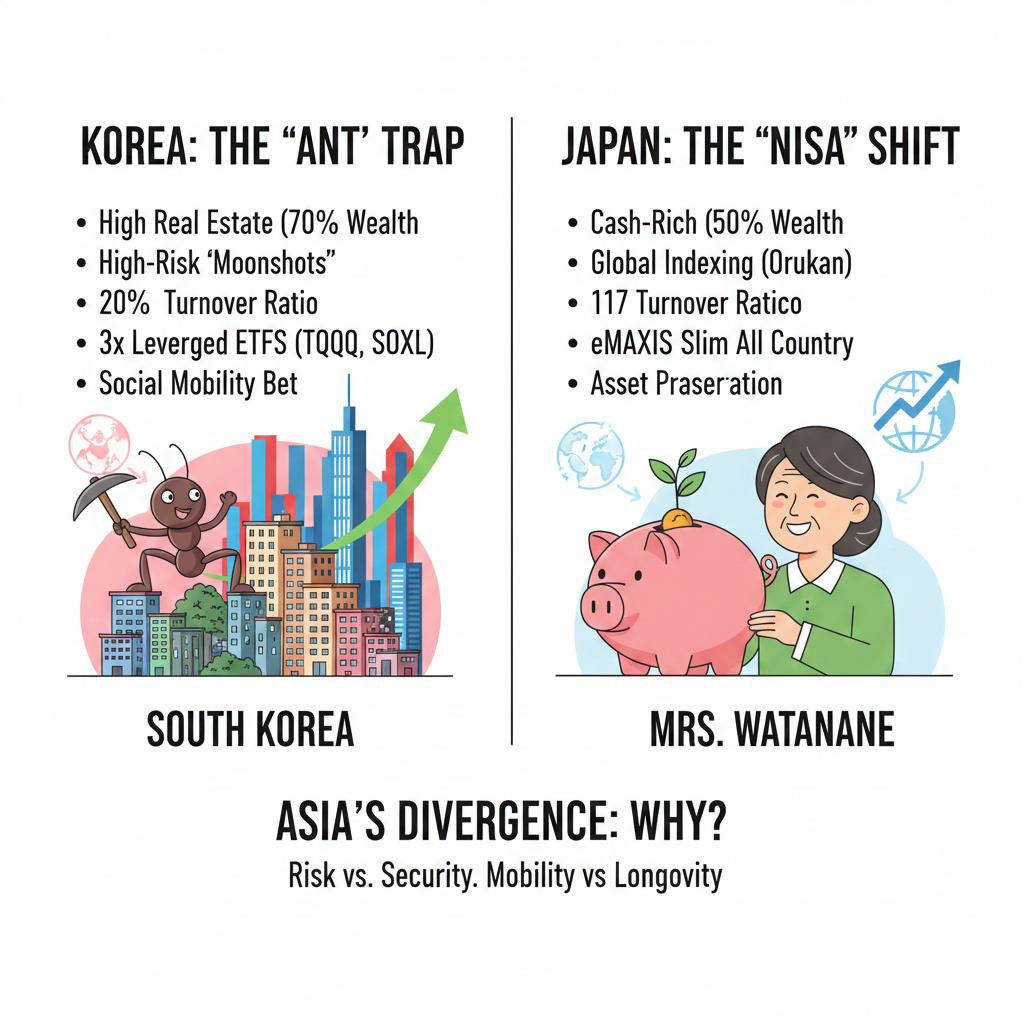
- South Korea: The Real Estate Trap. With 64.5% to 80% of net worth tied up in real estate, liquid capital is scarce. To make up for this “liquidity trap,” investors take extreme risks with their remaining cash. This is reflected in a massive 201% turnover ratio.
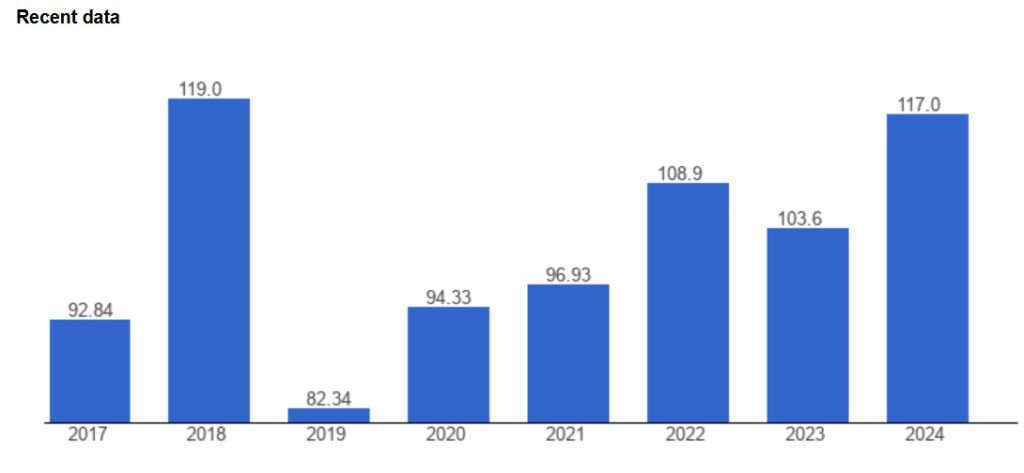
- Japan: The Cash-Rich Foundation. Japanese households hold over 50% of their wealth in cash. Now, they are moving this “dormant” capital into the market to fight inflation, favoring stability. Their turnover ratio is much lower at 117%.
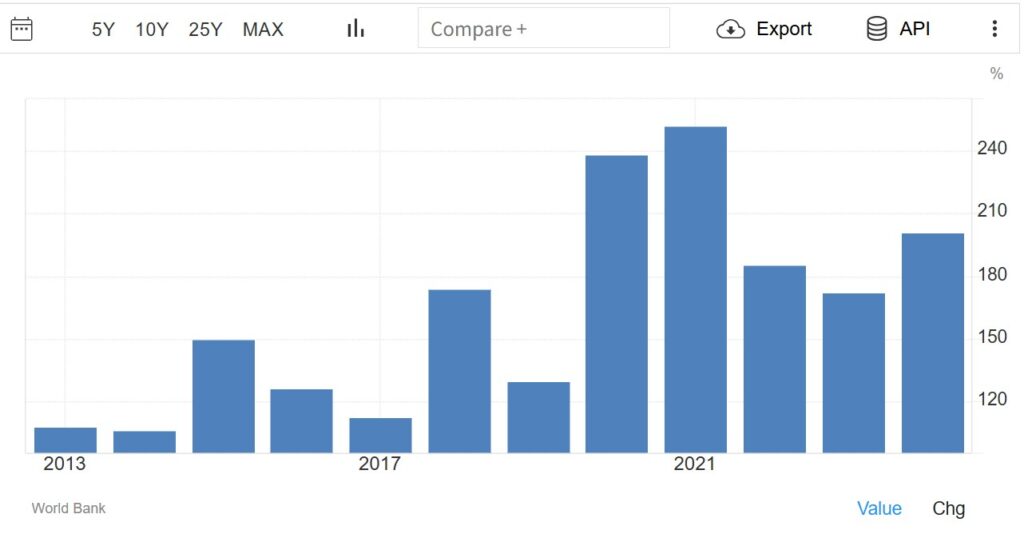
Above : Korean market turnover ratio
Below : Japanese market turnover ratio
2. “Moonshots” vs. “Orukan (オルカン)”
Risk tolerance looks very different on either side of the sea.
- 🇰🇷 South Korea: Pursuit of Leverage. Korean investors are the world’s biggest fans of 3x leveraged ETFs (TQQQ, SOXL). They also chase high-growth narratives, like IonQ, where Korean retail investors held nearly one-third of the company’s total shares by late 2024.
- 🇯🇵 Japan: The Rise of “Orukan” (オルカン). Under the new NISA (Nippon Individual Savings Account) scheme, the dominant trend is the “eMAXIS Slim All Country”—affectionately known by Japanese investors as “Orukan” (オルカン). Instead of picking single winners, they are buying the global market for long-term security.
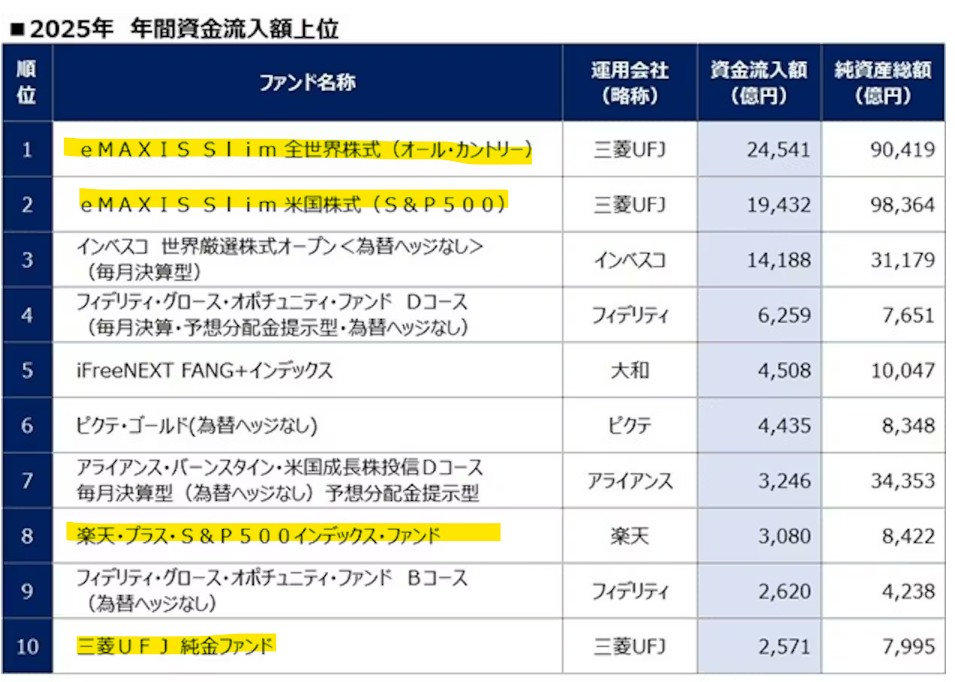
Quoted by https://www.nikkei.com/article/DGXZQOUB142810U6A110C2000000/
3. The “Korea Discount” vs. Japan’s “Value-Up” Success
Why the escape?
- South Korea: The market suffers from the “Korea Discount,” where most companies trade below their book value (P/B < 1.0). Investors see the domestic market as a “trap” and head to Wall Street.
- Japan: The Tokyo Stock Exchange’s “Corporate Value-up” program has successfully pressured companies to return value to shareholders, restoring trust in the Nikkei.
4. The “Social Ladder” vs. Asset Preservation
In Korea, skyrocketing real estate prices mean young investors view high-risk stocks as their only “Social Ladder” to economic mobility. In Japan, having lived through the “Lost Decades,” the priority is Asset Preservation—ensuring their money lasts as long as they do.
Conclusion: A Rational Divergence
The “Ants” and the “NISA” investors are both acting rationally within their own economic environments. One is fighting for mobility; the other is securing longevity. As these two paradigms continue to evolve, the gap between Asia’s two largest retail markets will only grow wider.
Leave a Reply