
Introduction: From “One-Child” to “Please Have Three”
For decades, China was known for its strict population control. Fast forward to 2026, and the script has completely flipped. The Chinese government is now in a frantic race against time to reverse a shrinking population. Despite lifting all limits and offering cash, the birth rate remains at historic lows. What changed, and why is the youth “lying flat” (Tang Ping) instead of starting families?
1. The Shocking Reality of 2026 Statistics
As of early 2026, experts estimate China’s total fertility rate has dipped below 1.0—well below the 2.1 needed to maintain a stable population.
- Population Decline: China has seen its population shrink for four consecutive years.
- Economic Stakes: A shrinking workforce means fewer people to support a rapidly aging society, threatening China’s long-term economic growth.
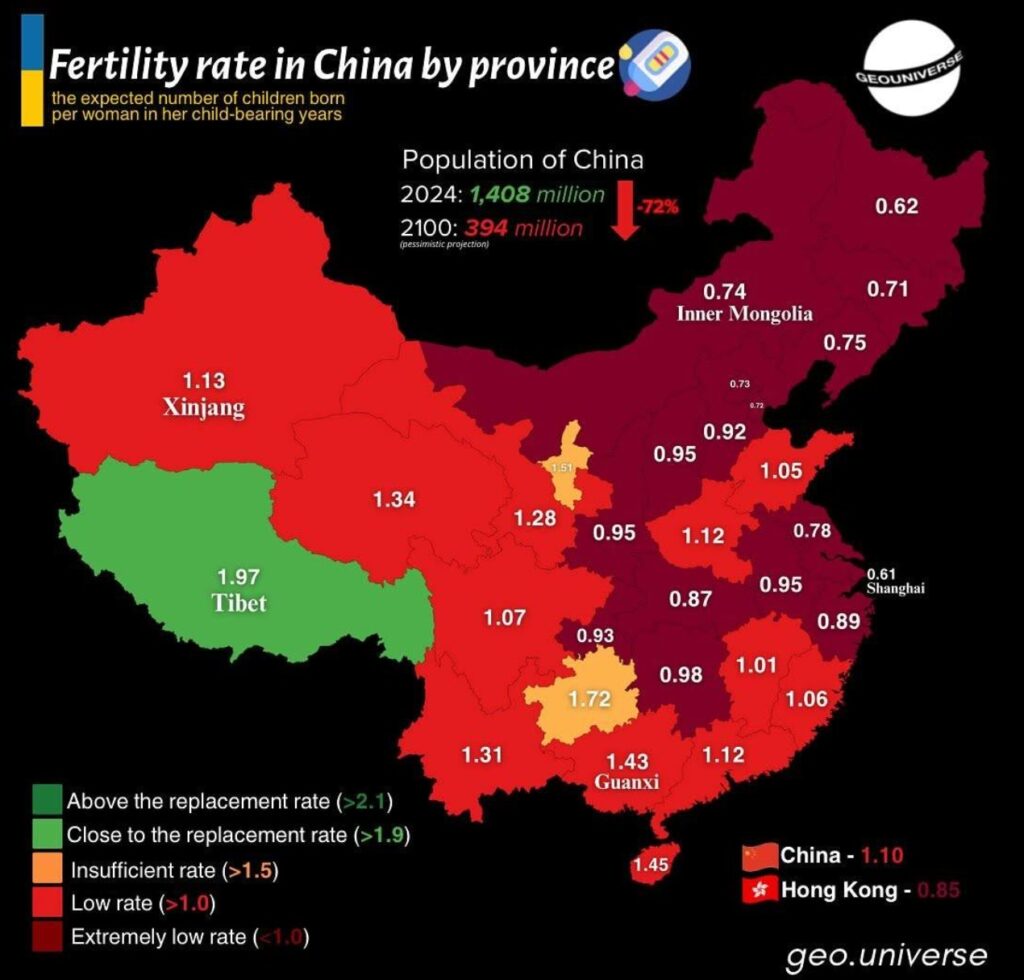
Fertility Rate by each province.
Source : geo.universe
2. Desperate Measures: The 2026 “Condom Tax” and Subsidies
To combat this, Beijing has moved from “encouragement” to “aggressive intervention.”
- The Contraceptive Tax: In a controversial move starting January 1, 2026, China removed value-added tax (VAT) exemptions for contraceptives like condoms and birth control pills, effectively imposing a 13% tax. The message is clear, if not controversial: the state wants fewer barriers to pregnancy.
- Direct Cash Subsidies: Starting in 2025, the government launched a nationwide program offering 3,600 RMB (approx. $500) annually for every child under the age of three.
- “Free” Childbirth: By 2026, many provinces are aiming to make standard childbirth costs 100% covered by national insurance, leaving families with zero out-of-pocket medical expenses.
3. Why These Policies Are Falling Flat
If the government is paying people to have kids, why aren’t they? The reasons are deeply structural:
- The “Invisible” Costs: While $500 a year helps, the cost of raising a child in major cities like Beijing or Shanghai until age 18 can exceed 1 to 2 million RMB. The subsidy is a drop in the ocean.
- The Legacy of the One-Child Policy: Decades of the one-child rule have created a cultural shift. Young adults, often only children themselves, are prioritizing personal freedom and career stability over traditional family roles.
- High-Pressure “Involution” (Neijuan): The hyper-competitive education system and job market make parents hesitant to bring a child into a world where “success” requires such extreme sacrifice.
- Gender Inequality: Many women fear the “motherhood penalty” at work, where taking maternity leave can lead to demotions or lost opportunities, despite new government protections.
4. Conclusion: A Rational Social Response
China’s fertility collapse isn’t about a lack of patriotism; it’s a rational economic response to high living costs and low social mobility. Until the “big structural issues”—like housing, work-life balance, and gender equality—are addressed, even the most creative taxes or subsidies may fail to turn the tide.
Leave a Reply