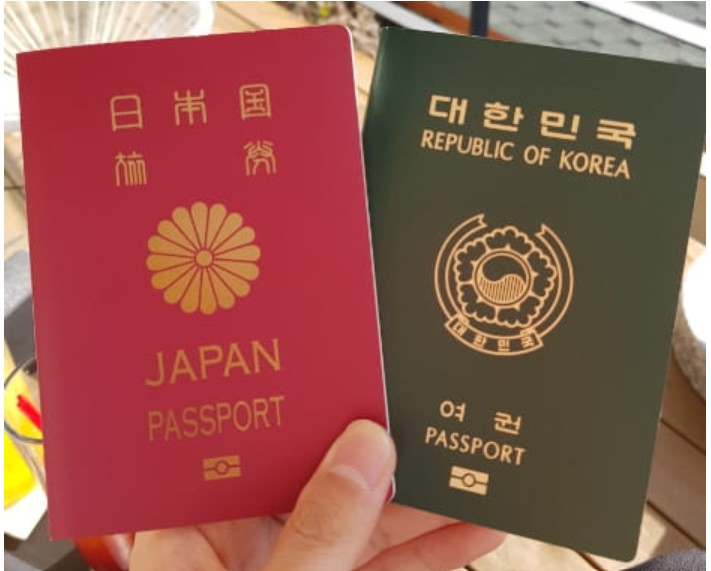
On paper, South Korea and Japan look like economic twins. Both are East Asian powerhouses with a GDP per capita in the mid-$30,000 range. Both face the demographic challenge of aging populations. And most impressively, both nations consistently hold the title for the world’s most powerful passports.
According to the 2025 Henley Passport Index, citizens of both countries can visit nearly 190 destinations visa-free. The doors to the world are wide open for both.
However, the scene at their airports couldn’t be more different. In Seoul (Incheon), the departure gates are overflowing with Koreans eager to explore the world. In Tokyo (Haneda/Narita), the terminals are packed with incoming tourists, while the locals are nowhere to be found.
Why does one twin pack their bags while the other locks the door? I’ve analyzed this “Great East Asian Travel Paradox.”
1. The Numbers: A Massive Divide (60% vs. 17%)
Let’s look at the statistics. The gap is not just a feeling; it is a massive structural divergence.
- 🇰🇷 South Korea: Passport ownership rate is nearly 60%. In 2024, approximately 28.6 million Koreans traveled abroad.
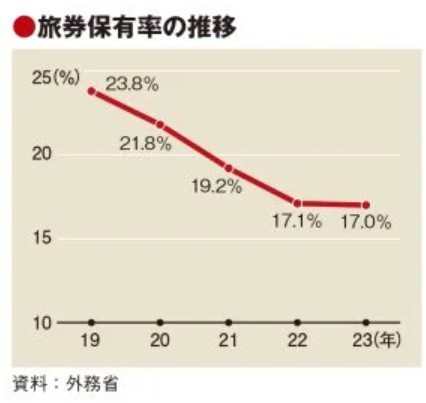
- 🇯🇵 Japan: Passport ownership rate is a mere 17%. In 2024, only about 13 million Japanese traveled abroad.
Despite having double the population of Korea, Japan sends less than half the number of travelers overseas.
2. The Psychology: “The Great Escape” vs. “The Satisfaction Trap”
The most common explanation is cultural—that Japanese people are naturally risk-averse. But looking deeper, it comes down to how each nation views its own geography and domestic value.
🇰🇷 Korea: The Urge to “Escape”
South Korea is a peninsula that effectively functions as an island due to the closed border to the north. While beautiful, domestic travel options are limited in variety compared to the sheer size of Japan.
For many Koreans, domestic trips (like to Jeju Island) have become notoriously expensive due to inflation. A common sentiment in Korea is, “If I’m going to spend this much, I might as well go to Vietnam or Japan.” For Koreans, travel is an active “escape”—a rational choice to seek better value and new experiences outside a high-pressure society.
🇯🇵 Japan: The “Satisfaction Trap”
Japan, on the other hand, is an archipelago that stretches from the subarctic north to the subtropical south.
- Want world-class powder snow? Hokkaido.
- Want emerald beaches and resorts? Okinawa.
- Want history? Kyoto.
- Want a cyberpunk metropolis? Tokyo.
Japan is geographically and culturally “complete.” You can experience drastically different climates, foods, and cultures without ever needing a passport. This creates a “Satisfaction Trap.”
Japanese people aren’t just afraid of foreign languages or safety; they are genuinely satisfied with the high quality of domestic tourism. Why leave when everything you need—and the service quality you expect—is already here?
3. The Economic Reality: Who Can Actually Afford It?
Psychology explains the desire, but economics explains the ability. The reality is that the “economic twins” have very different wallets right now.
① The Currency Gap (Buying Power)
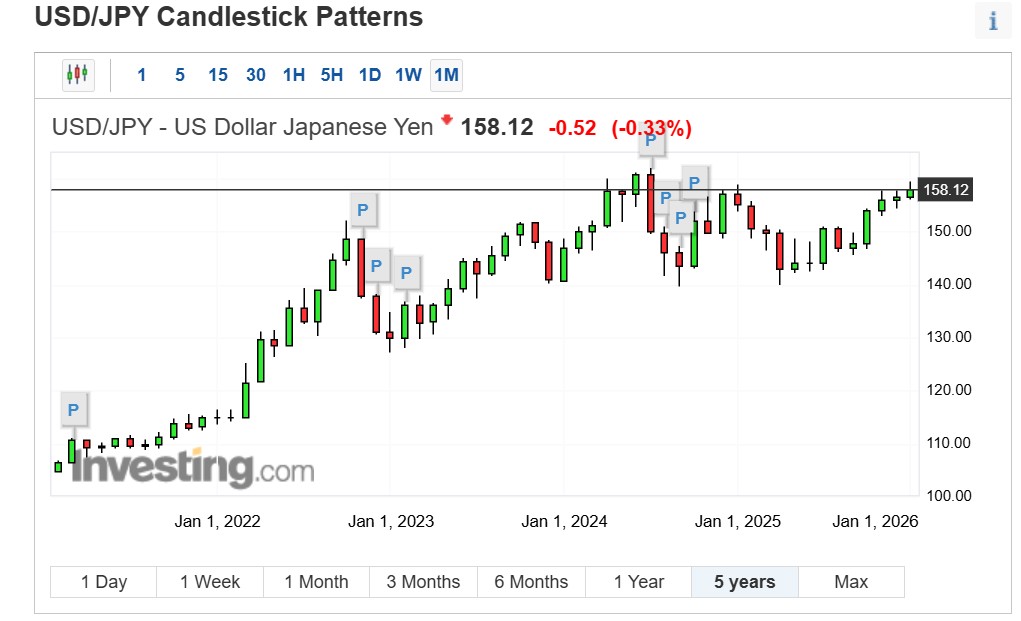
The historic depreciation of the Yen (En-yasu) has made overseas travel feel like a luxury tax for Japanese citizens. While Koreans took advantage of the weak Yen to flock to Japan for “value shopping,” Japanese tourists found their currency worth significantly less abroad. A family trip to Hawaii has shifted from a middle-class norm to a high-end luxury.
② The 30-Year Wage Stagnation
While Korean wages have risen dynamically over the past two decades, Japanese real wages have been famously stagnant for 30 years. Even if the GDP numbers look similar, the perceived wealth of an average Korean worker feels higher when looking at global purchasing power.
③ The Hidden Barrier: Passport Costs
Here is a shocking detail that few people talk about. The cost to simply get the passport is vastly different.
- Korea: A 10-year passport costs about 53,000 KRW (~$38 USD).
- Japan: A 10-year passport costs 16,000 JPY (~$110 USD).
It costs a Japanese citizen nearly 3 times more to get a passport than a Korean. For a Japanese family of four, the “startup cost” just to get the documents is over $400 USD. In Korea, it’s closer to $150. This high administrative barrier discourages people from taking that first step, effectively sealing the door before they even pack a bag.
4. The “Galapagos” Fear
The Japanese government is well aware of this and is actually panicked. They fear a “Galapagos Syndrome,” where young Japanese lose their international perspective and global competitiveness.
In a desperate move, the Japan Association of Travel Agents (JATA) and various regional airports have launched campaigns literally paying people to get passports. They are offering cash points, lottery wins, and parking fee waivers just to get locals to fly internationally.
It is a surreal situation: a government begging its citizens to use the world’s most powerful passport, while the citizens reply, “No thanks, the onsen here is fine.”
Conclusion: Two Different Paths
Korea and Japan may be neighbors, but their travel habits reveal a deep contrast in their current reality.
Koreans are “Outward-Looking,” driven by a desire for value and expansion. Japanese are becoming “Inward-Looking,” comforted by domestic quality but constrained by economic stagnation.
Until the Yen recovers or the cost of leaving drops, the world’s strongest passport will likely remain tucked away in a drawer in Yokohama, gathering dust while its owner enjoys a domestic hot spring.
Leave a Reply